
NeuroNest
Role: Lead Designer & User Researcher
Tags: Product Design, UX Design, UI Design, UX Research, UX Strategy
Overview
Epilepsy is a neurological disorder caused by unusual nerve cell activity in the brain. Approximately 1 in 26 people in the U.S. population are diagnosed with epilepsy. This is about 3.4 million people nationwide.
Problem Statement
Epilepsy patients come across difficult situations that trigger their lifestyles.
How might we help epilepsy patients of all ages (children, adults and seniors) manage their conditions in their daily lives?
Solution
To design a mobile app that would help empower epilepsy patients by collecting recorded data, and providing care and support when necessary. The product will help patients to communicate their symptoms quickly and effectively.
User Research
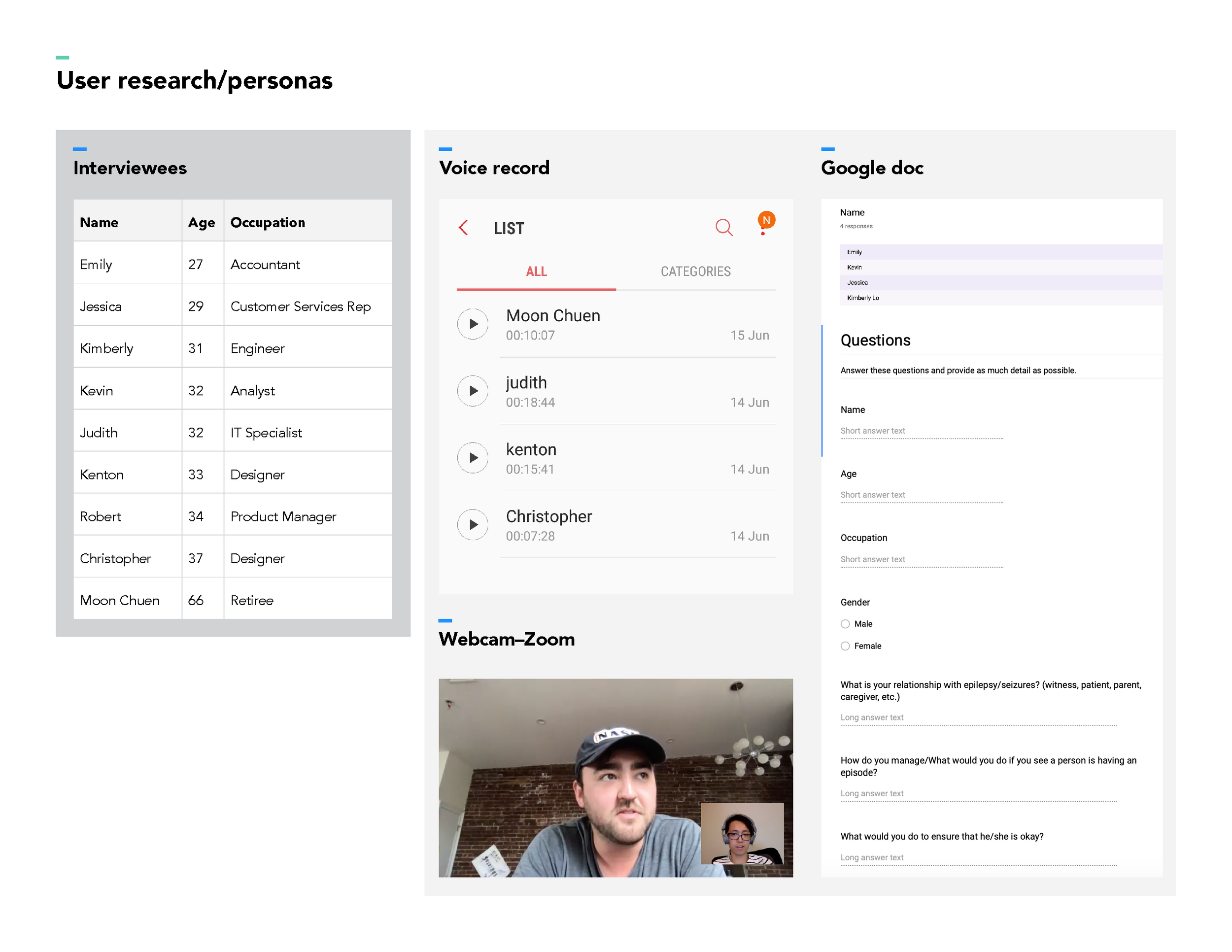
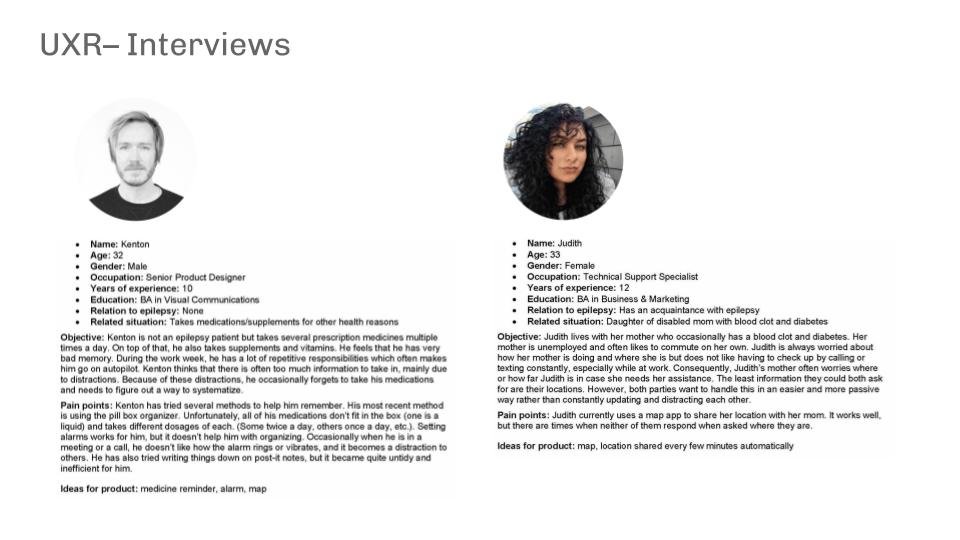
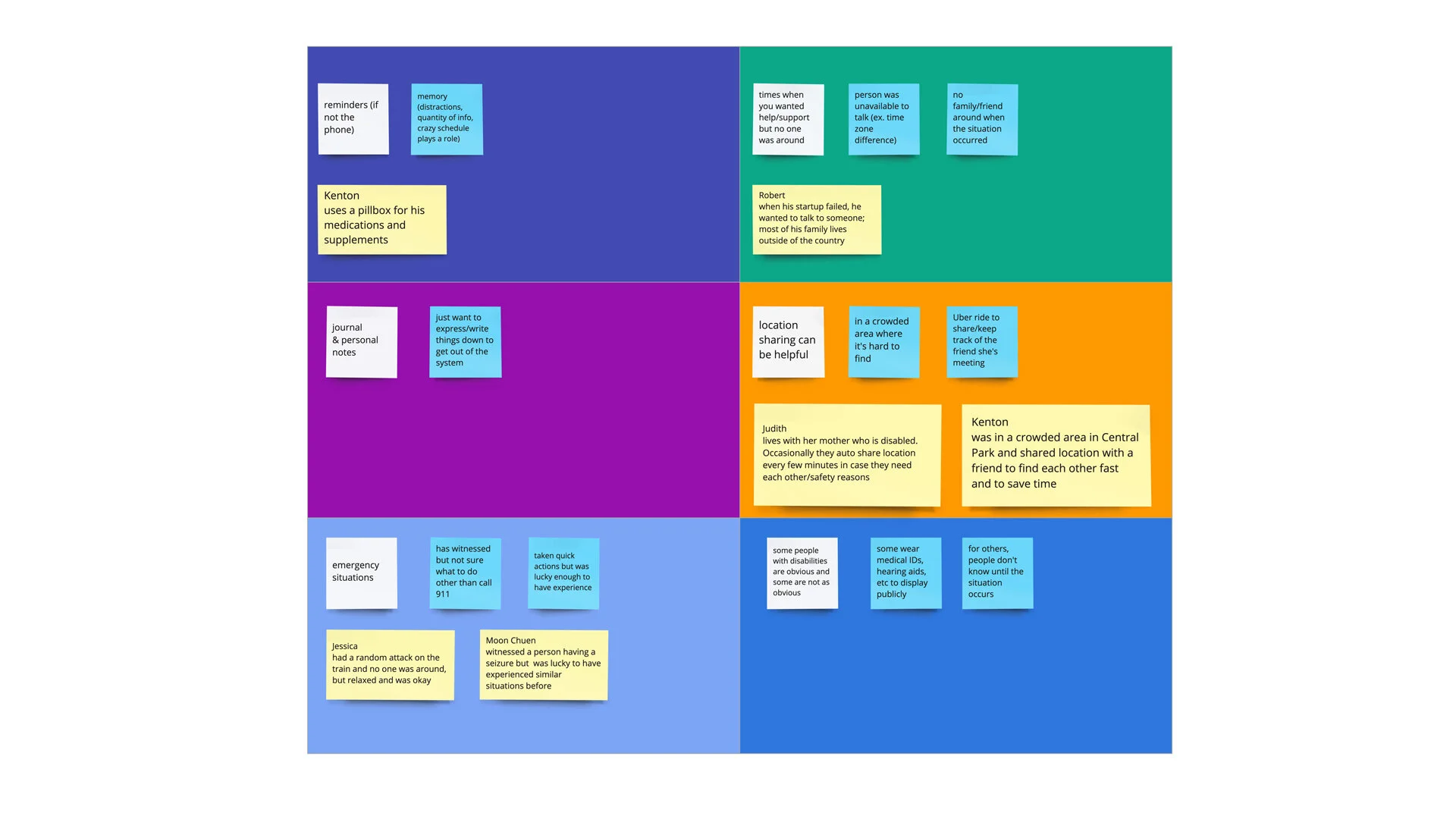
This project incorporated both qualitative and quantitative research to better understand the needs of people living with epilepsy. Interviews and usability testing provided qualitative insights into users’ daily challenges, emotional concerns, and condition management behaviors. These findings were complemented by quantitative methods, including surveys and usage metrics, to identify patterns and validate behaviors at scale. Together, these approaches informed a more empathetic and accessible mobile app experience grounded in real user needs.
Process
-
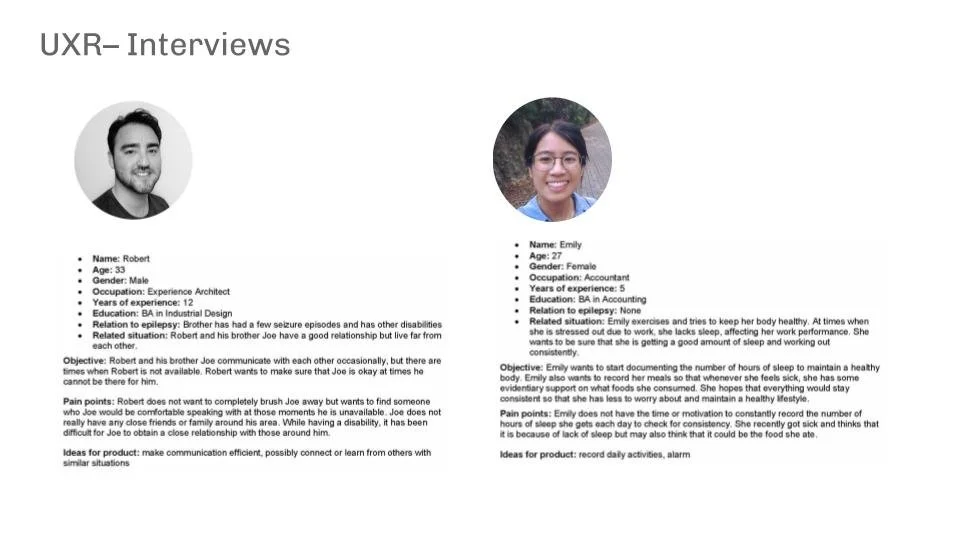
Personas
-
Recruit, conduct interviews & distribute surveys
-
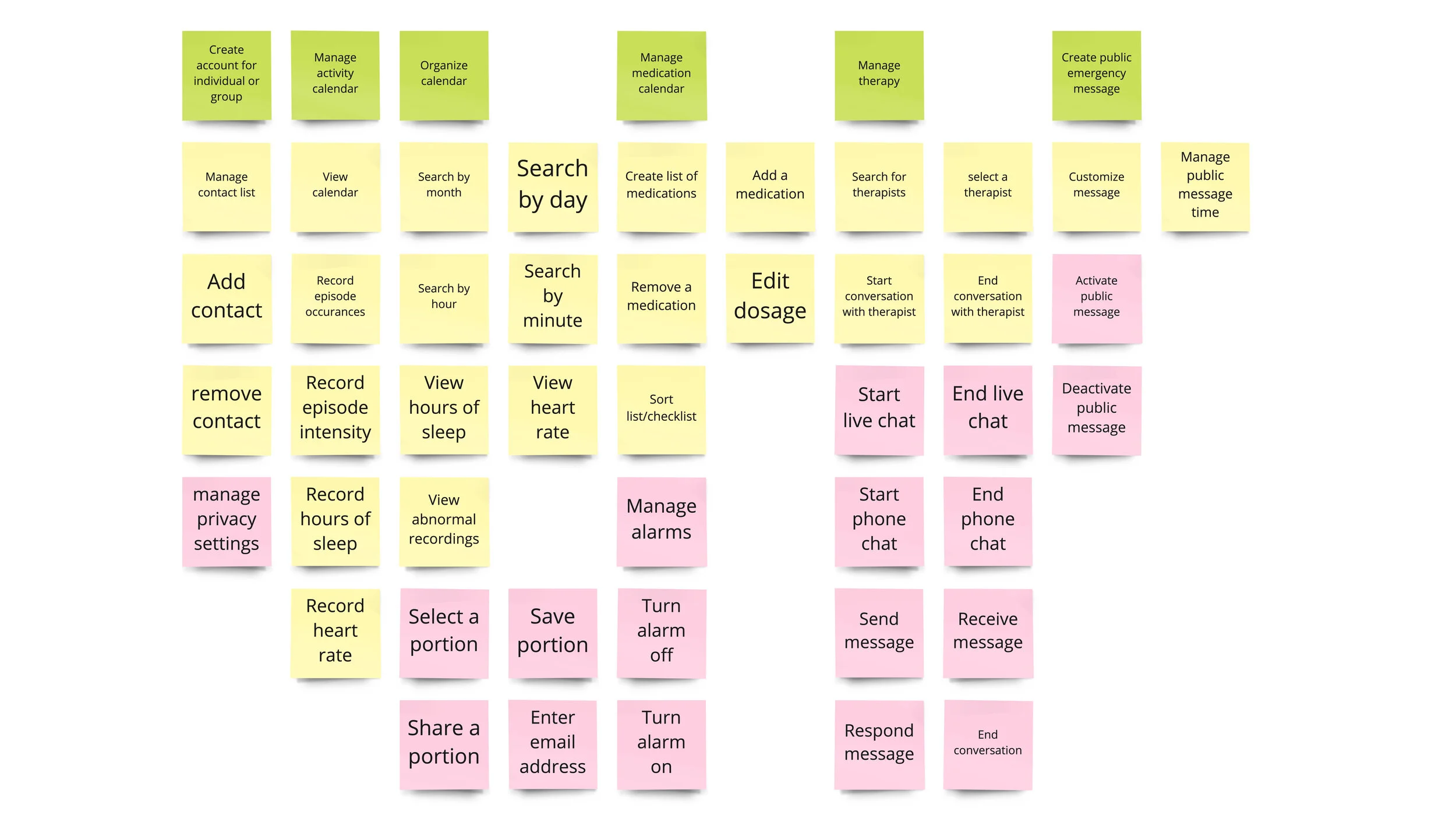
Gather key findings and begin mental modeling
-
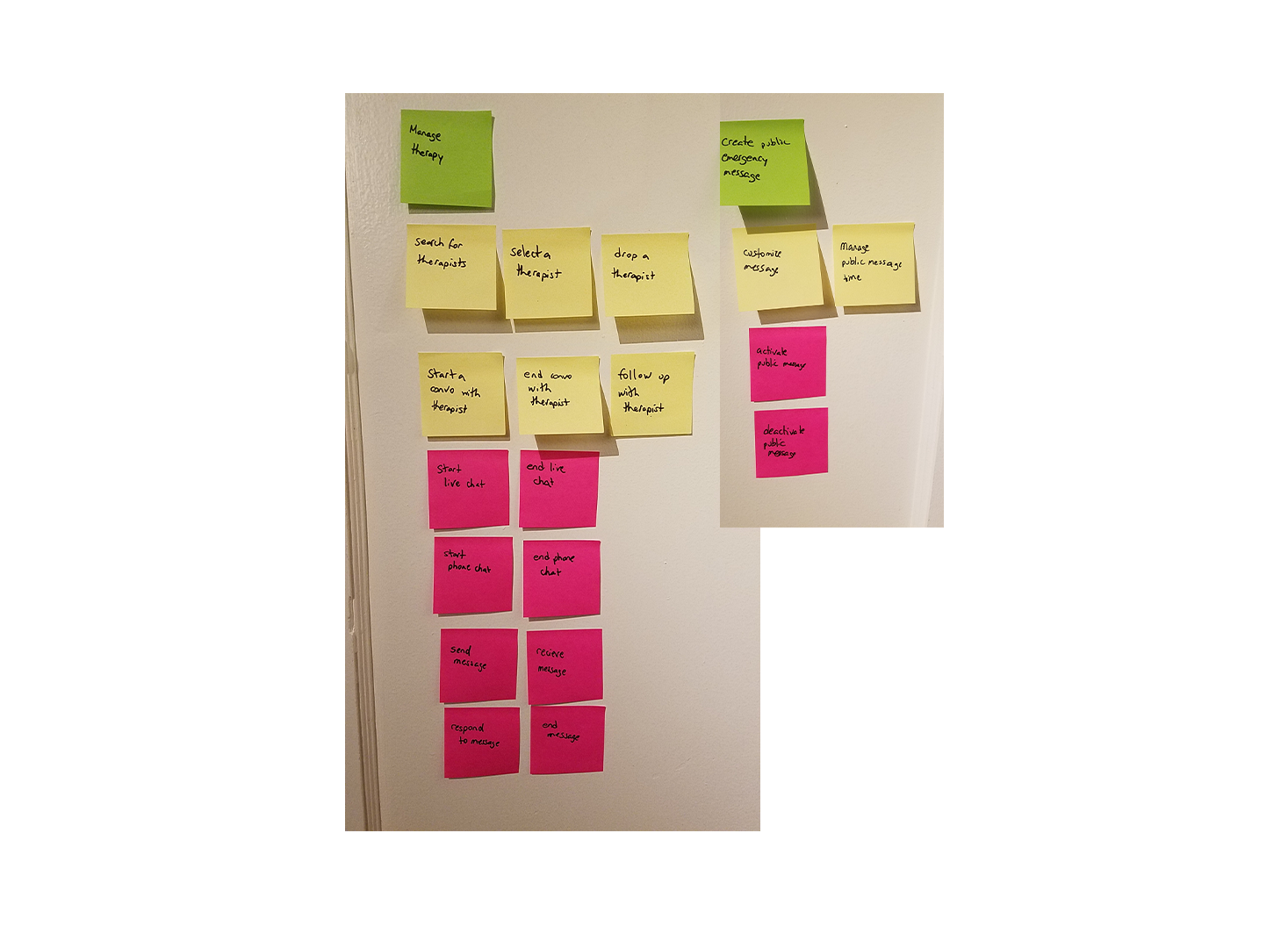
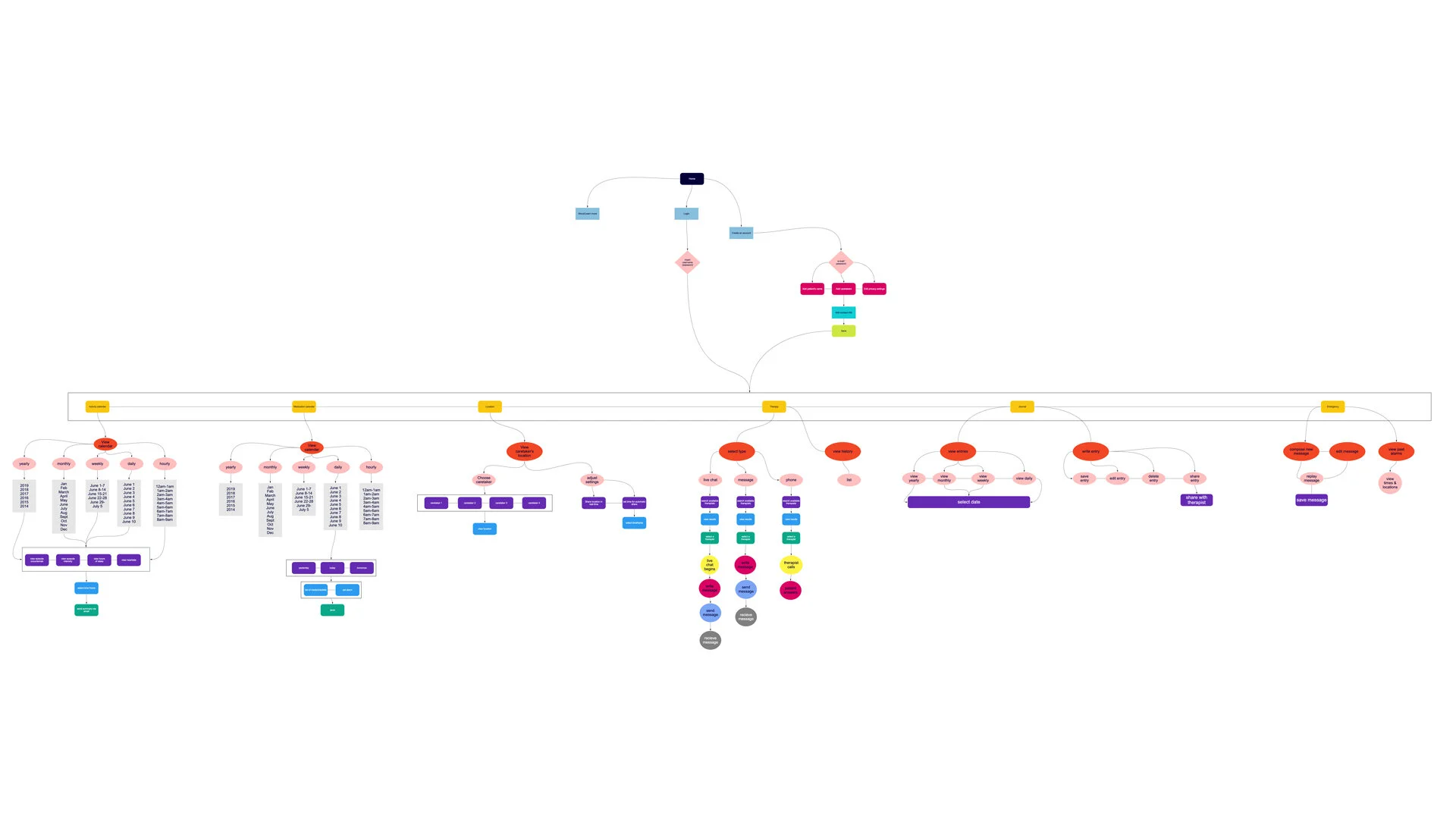
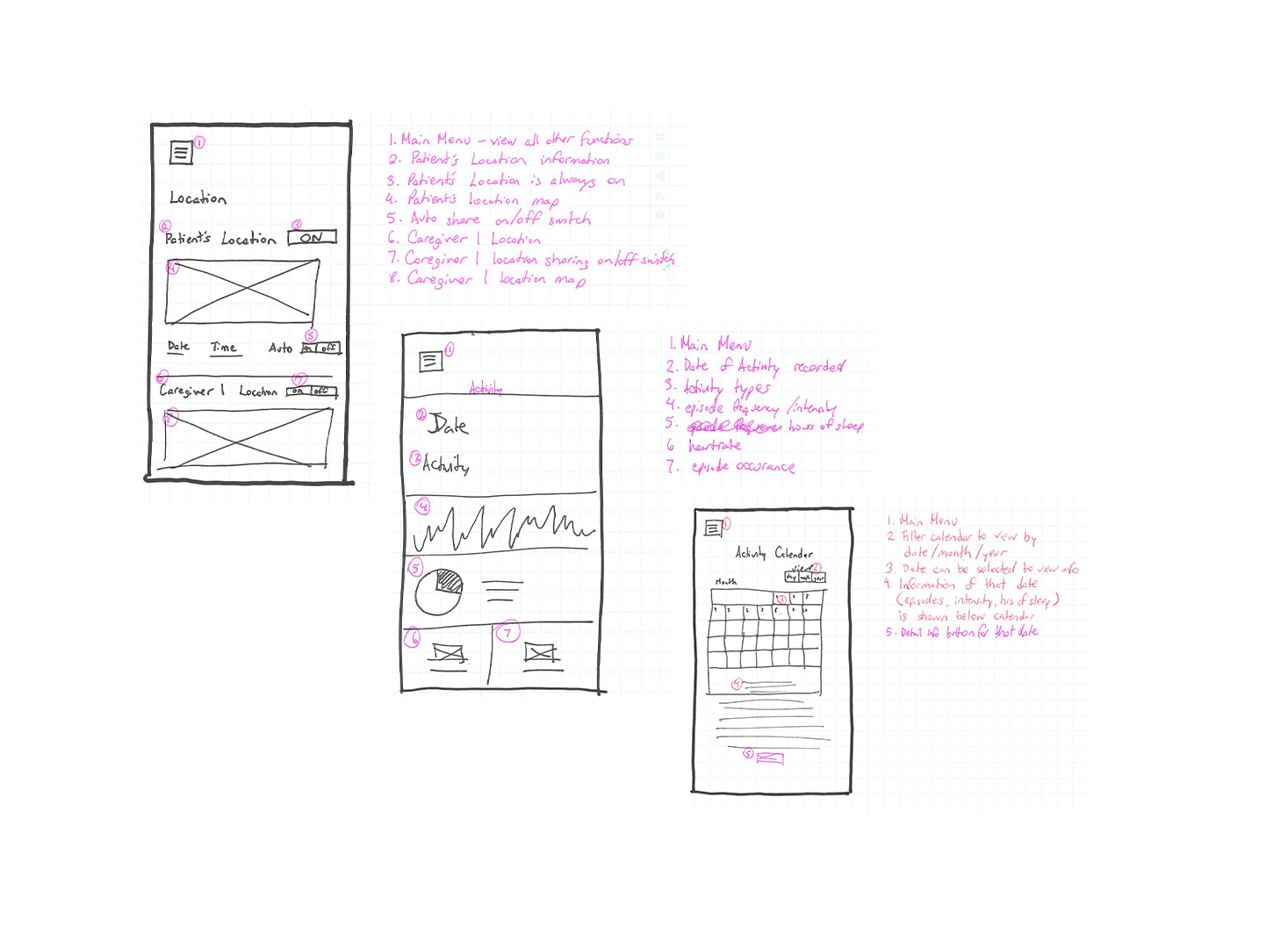
Information Architecture & Wireframing
-
Design & Prototyping
-
User Testing
Key Features
-
Patient Portal
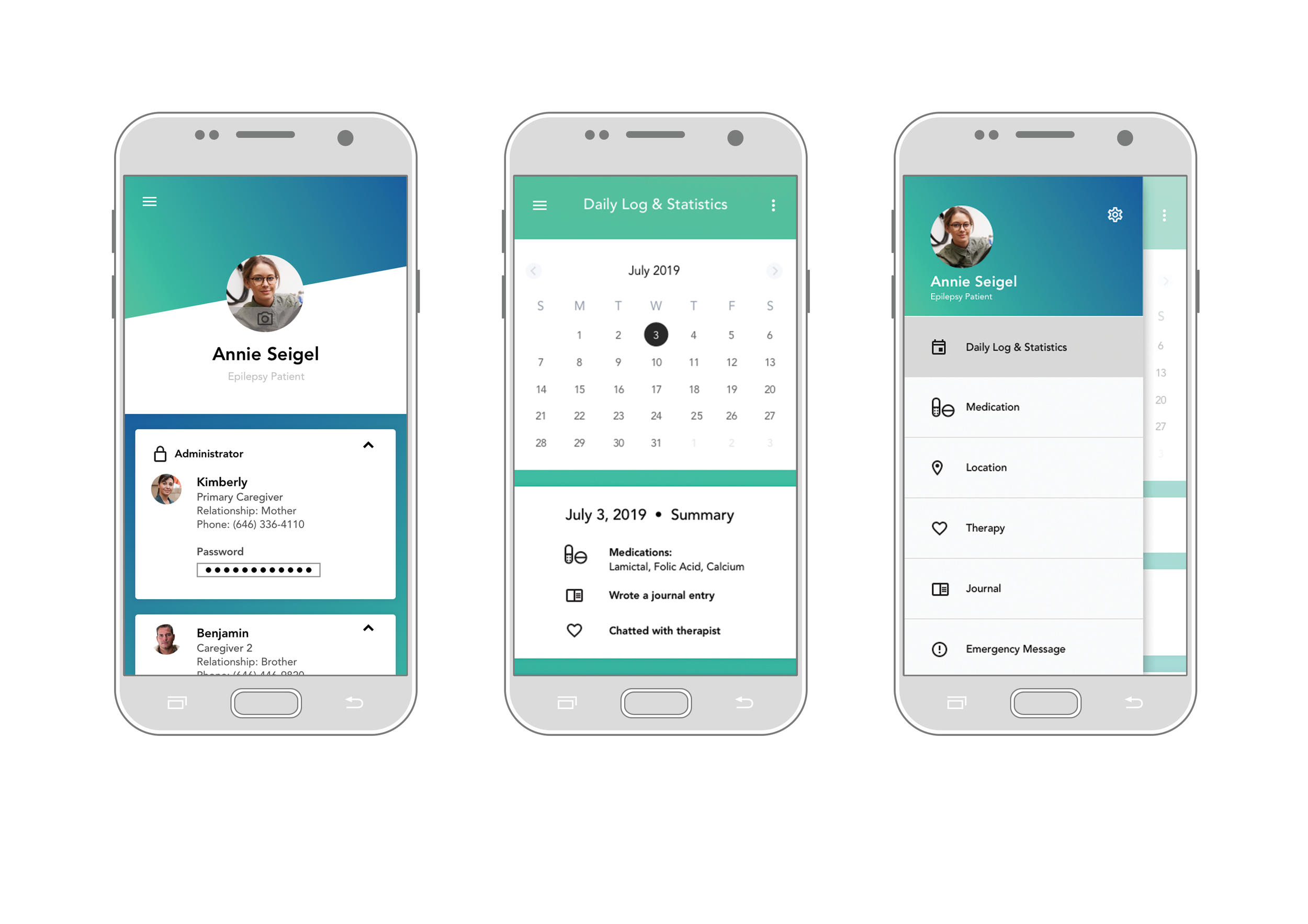
Custom patient profile with patient information giving individuals and caregivers the ability to manage
-
Custom Activity Log
Daily activity including intensity rate, heart rate, physical activity/pedometer
-
Medication Reminders
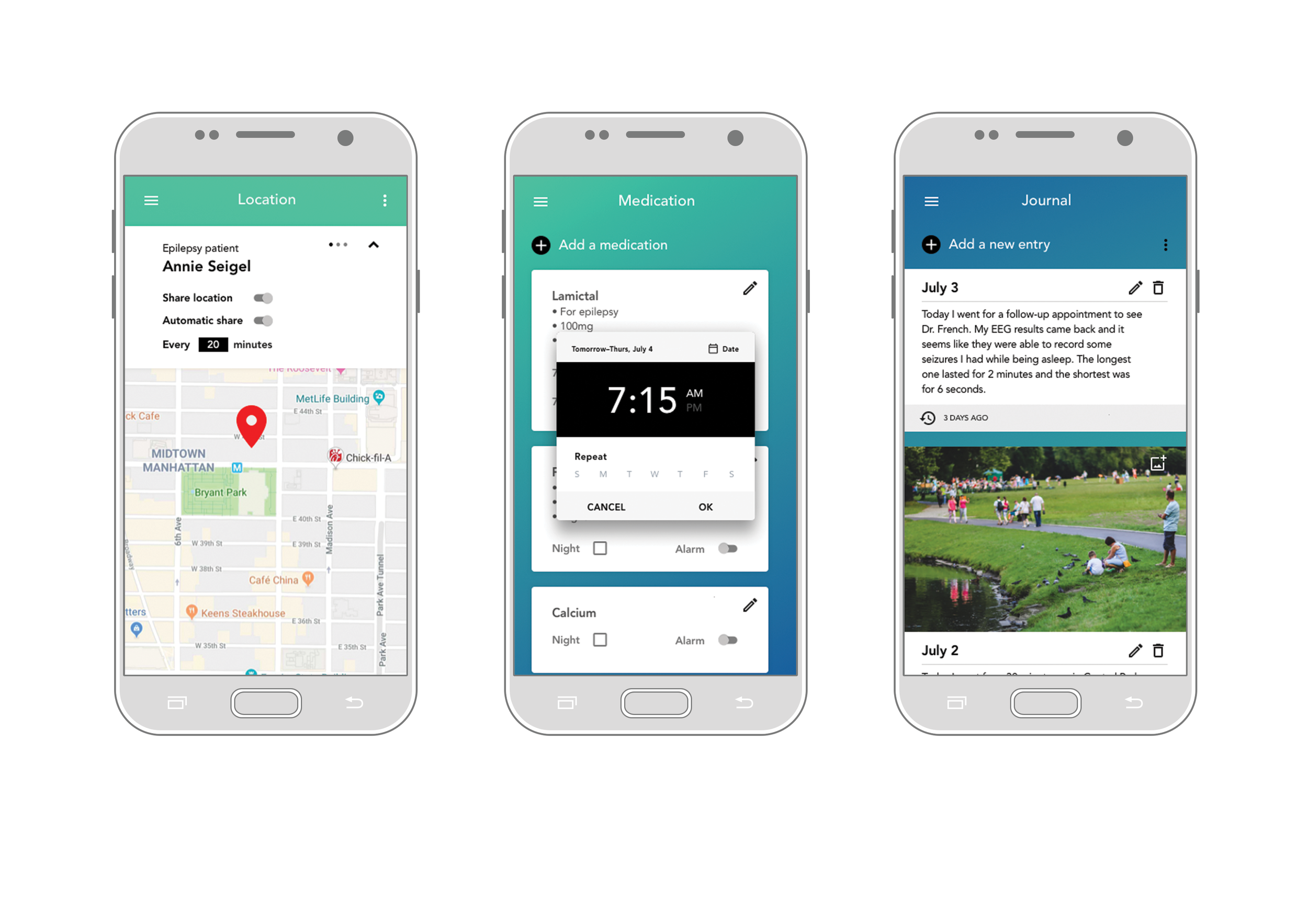
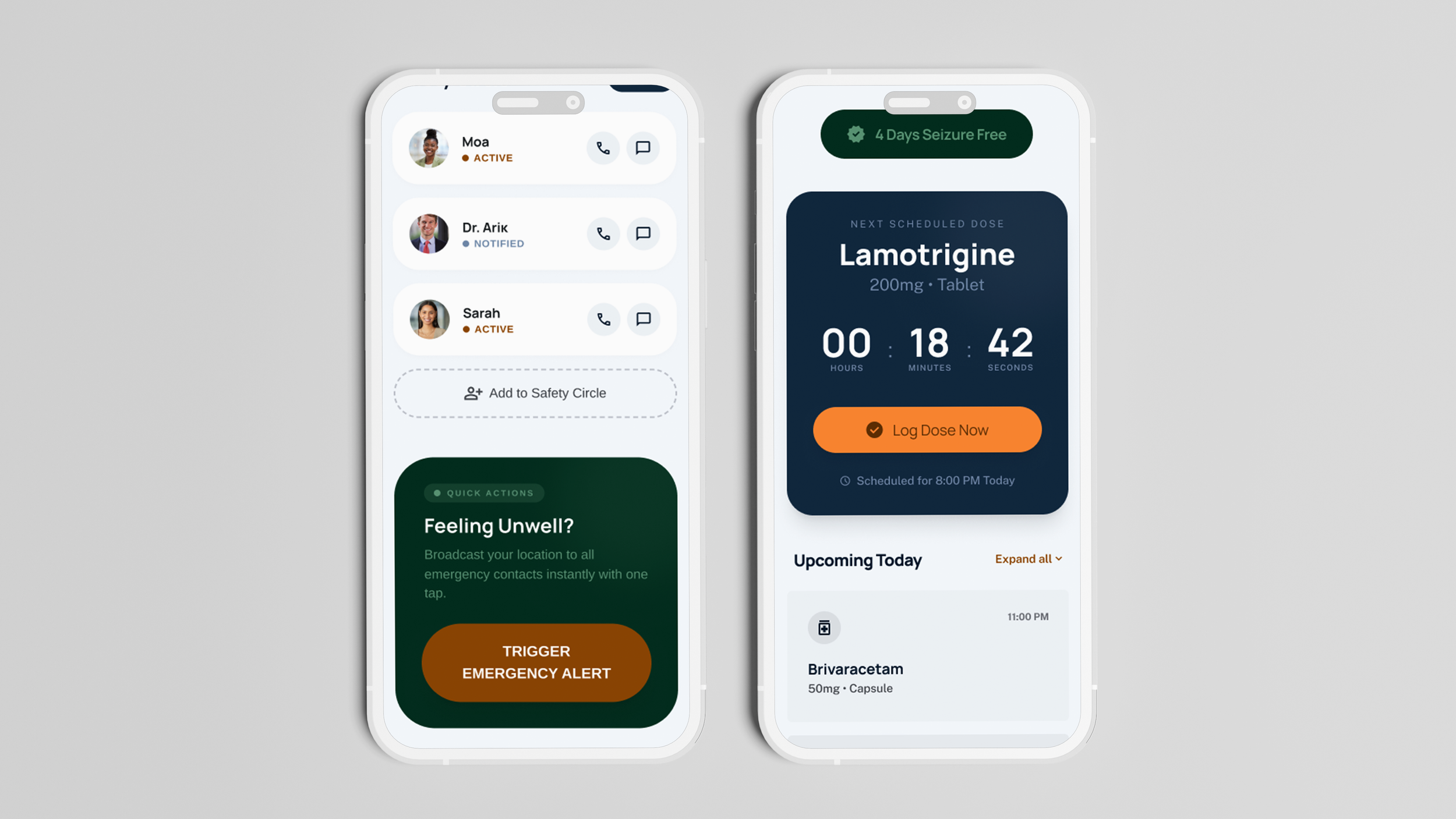
Medication organization including setting reminders, list of medications, calendar, and alarms
-
Location Sharing
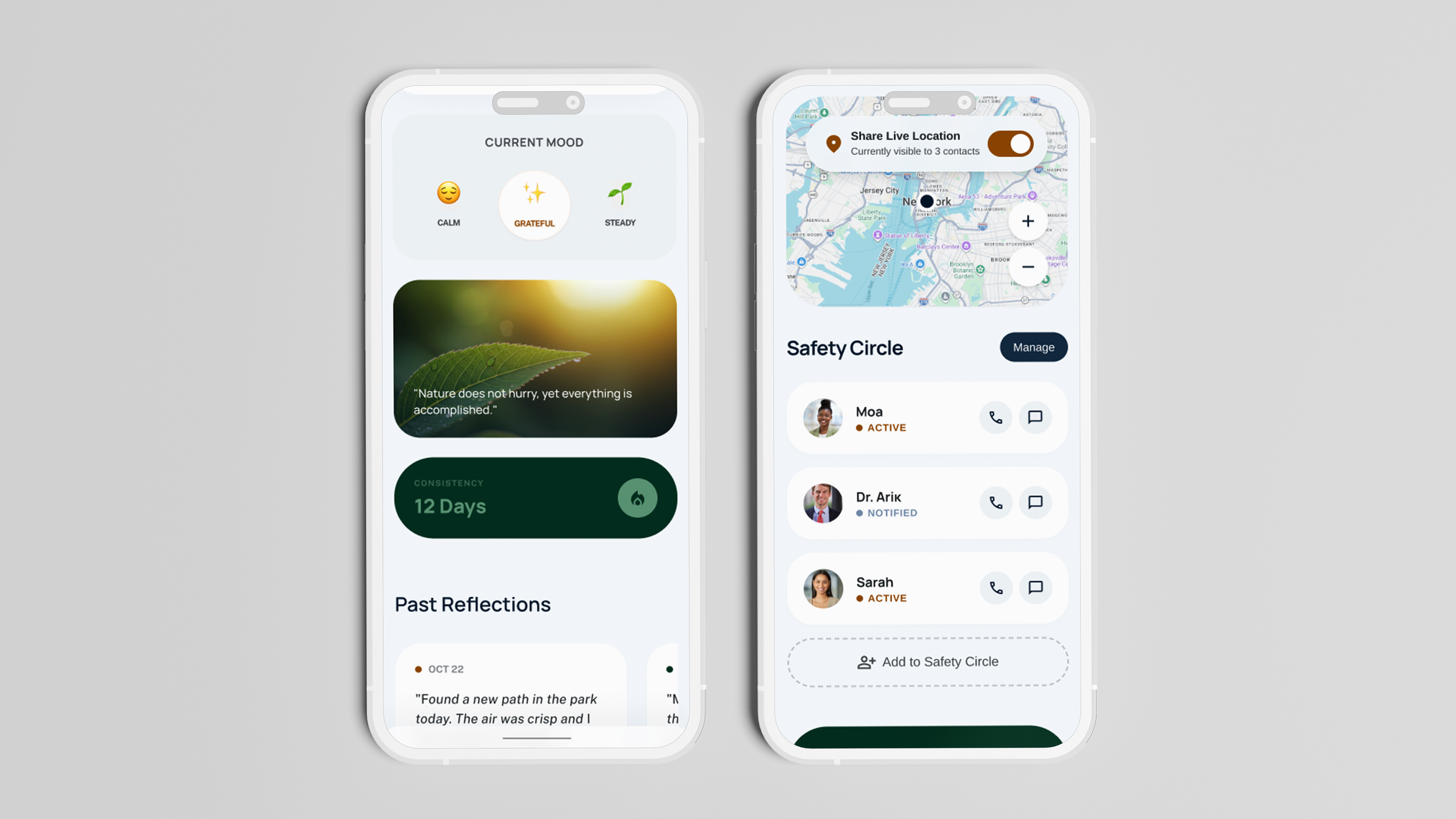
Manual or auto-share locations between patient and caregivers
-
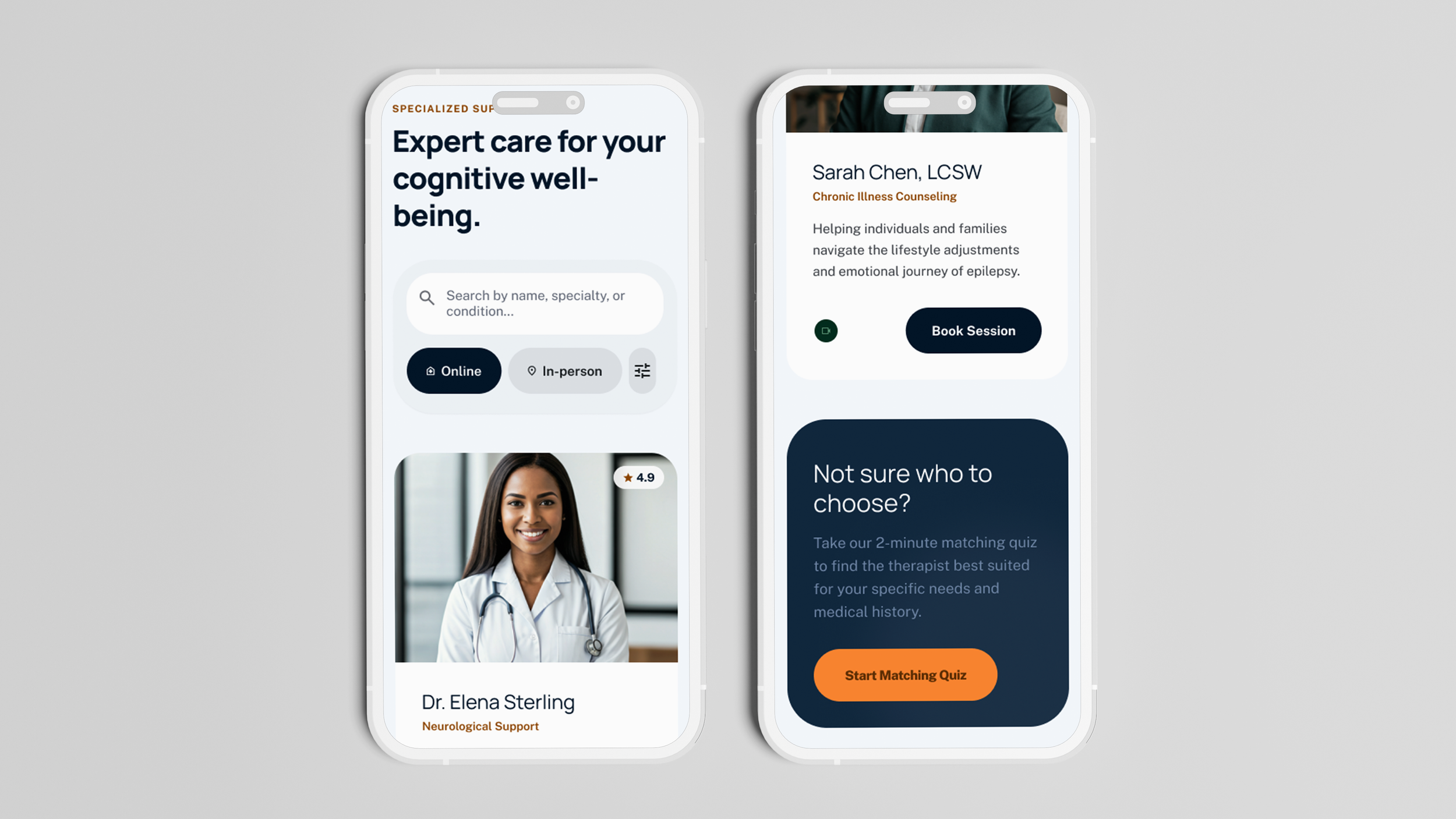
Online Therapy
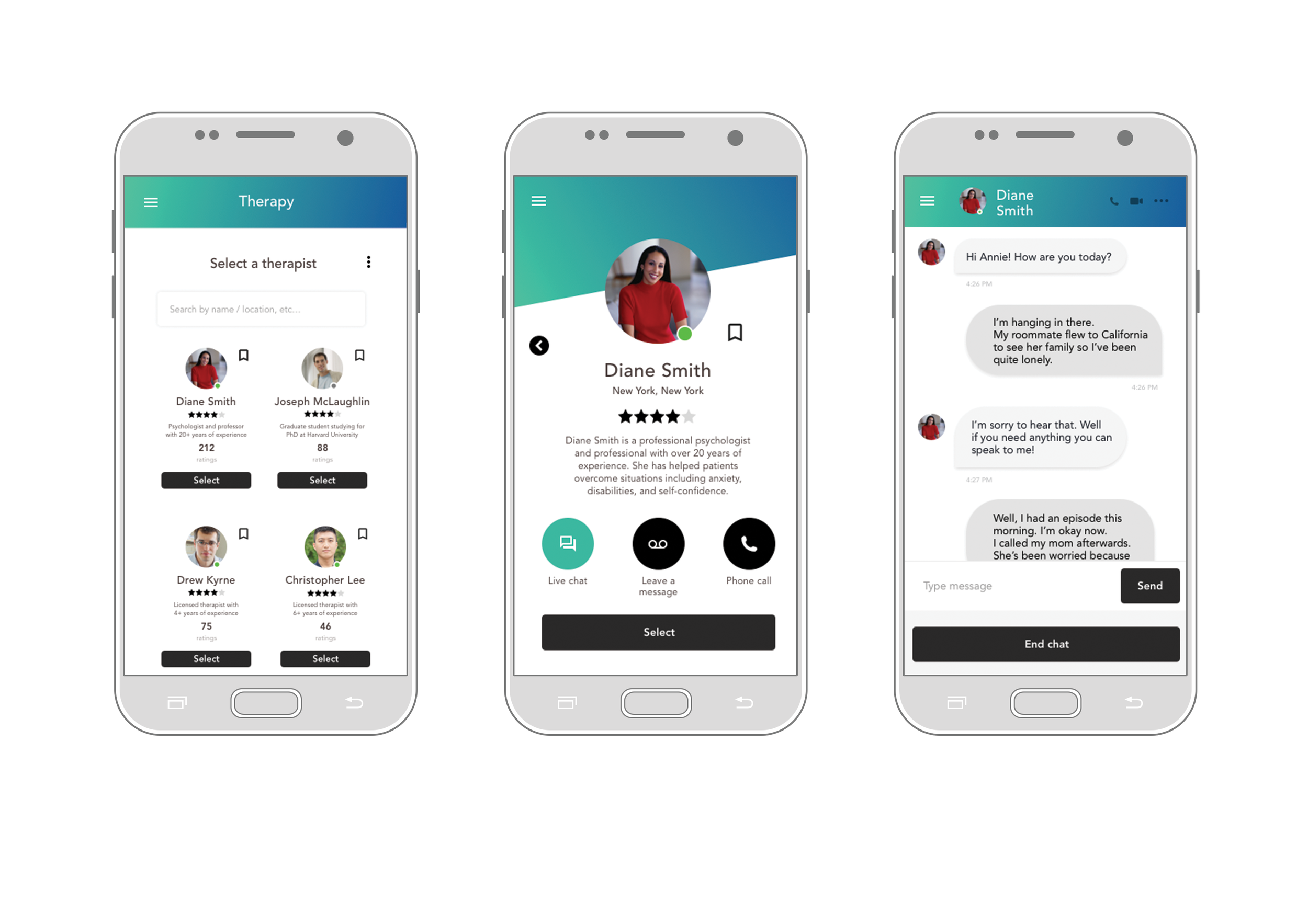
Match with a therapist immediately via phone call, online chat, or leave a message for selected therapist
-
Journal
Journal for self reflection
-
Emergency Alert
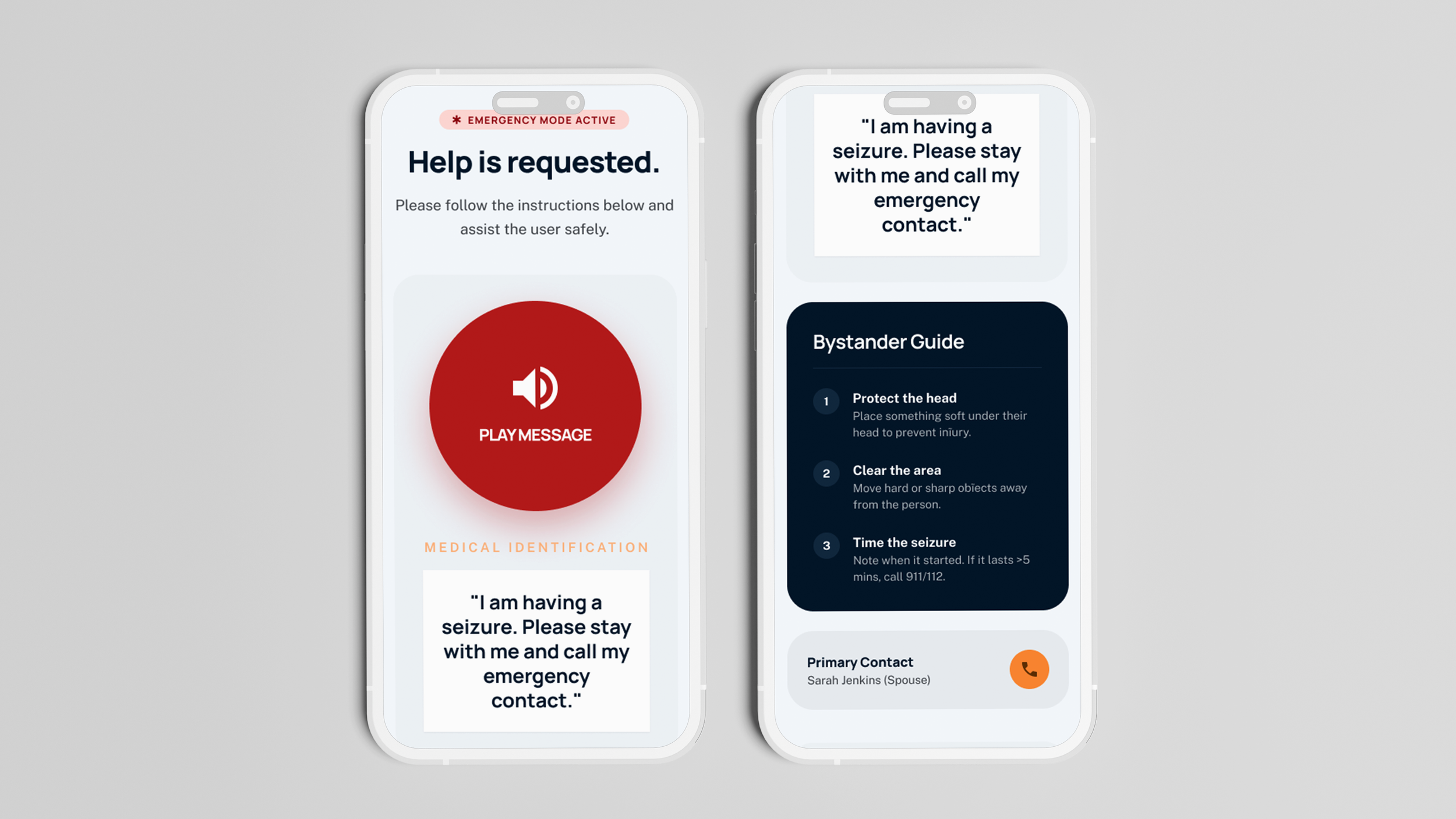
Provide pre-recording in case of an episode and when an episode occurs, a loud alarm or message will play
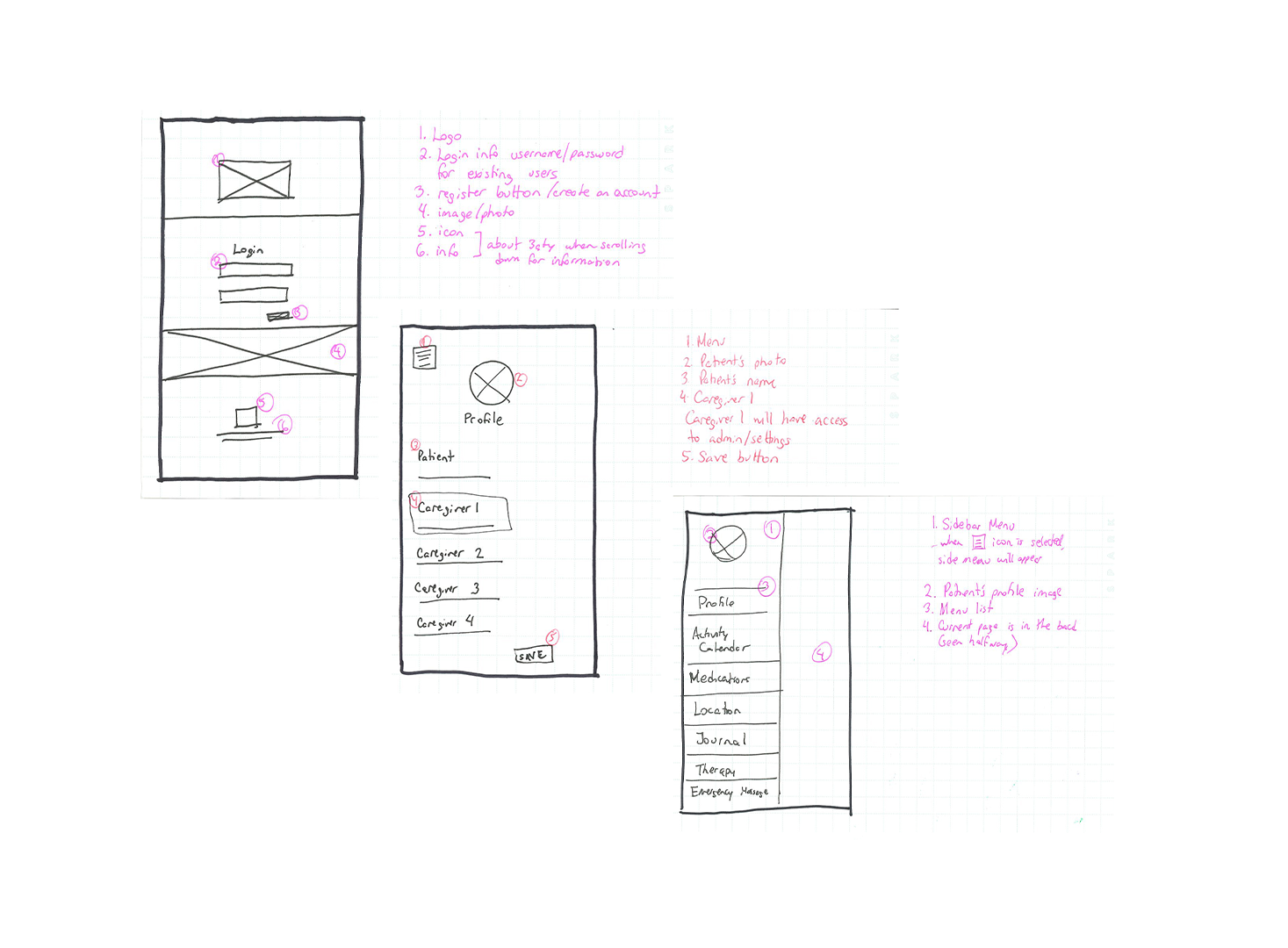
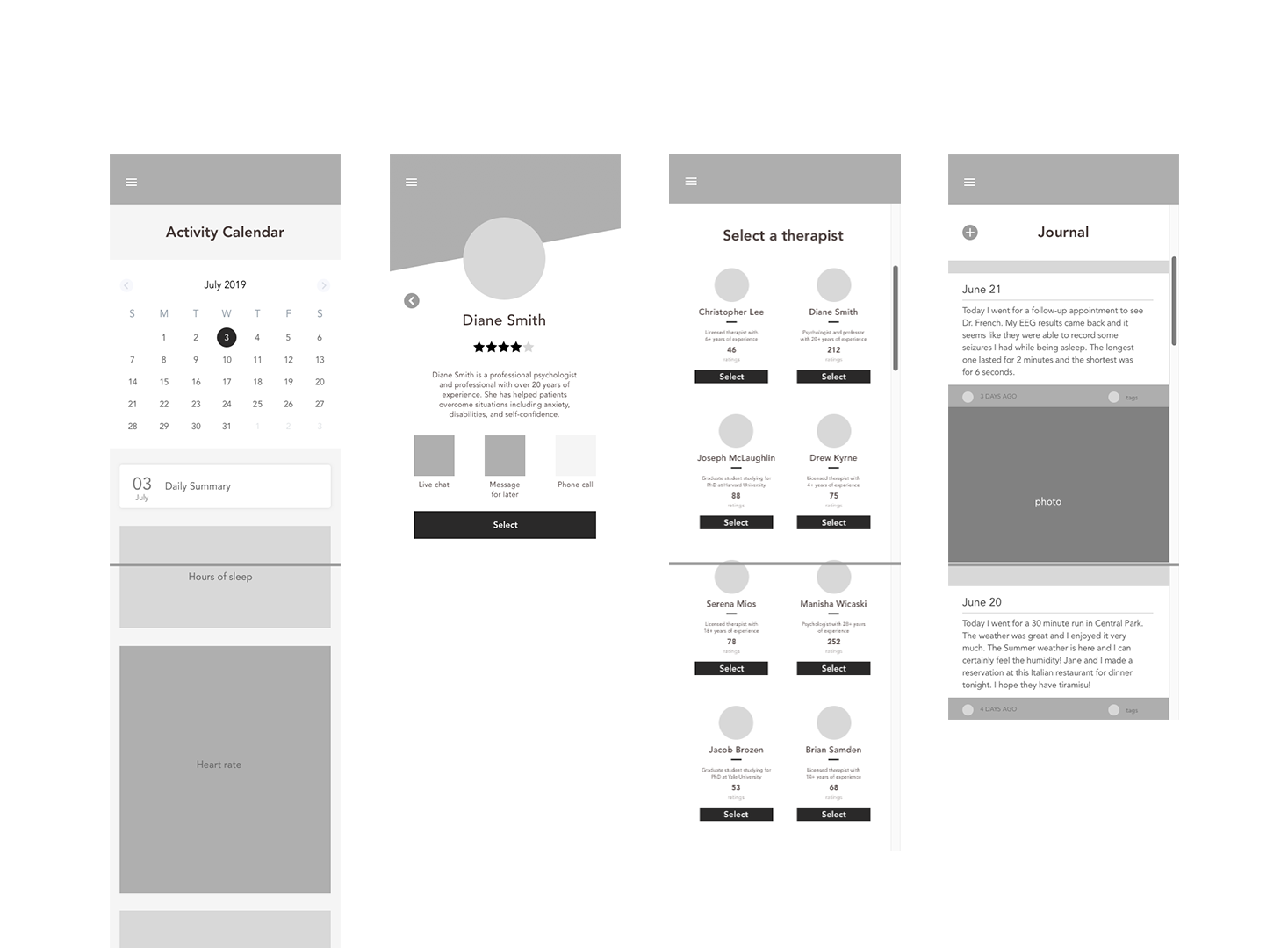
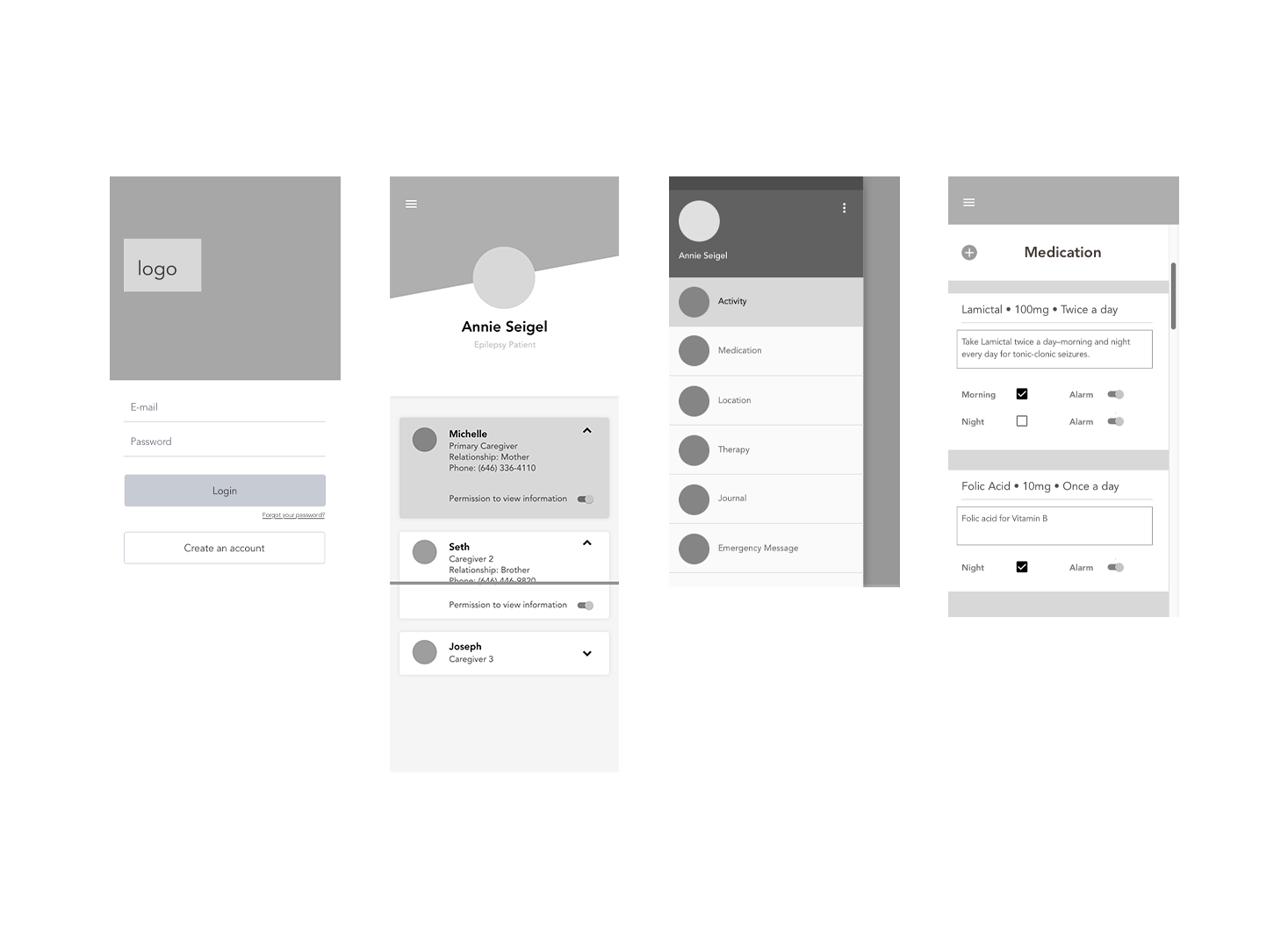
MVP- Version 1
Version 1 successfully delivered a cohesive experience that communicated the core value of patient support, with an emphasis on clarity and ease of use.
While the foundation and feature set were strong, the design lacked a higher level of refinement. Visual hierarchy, consistency, interaction details, and accessibility considerations needed further development. Version 1 validated the concept, but required additional polishing to create a more trustworthy, intuitive, and fully realized user experience.
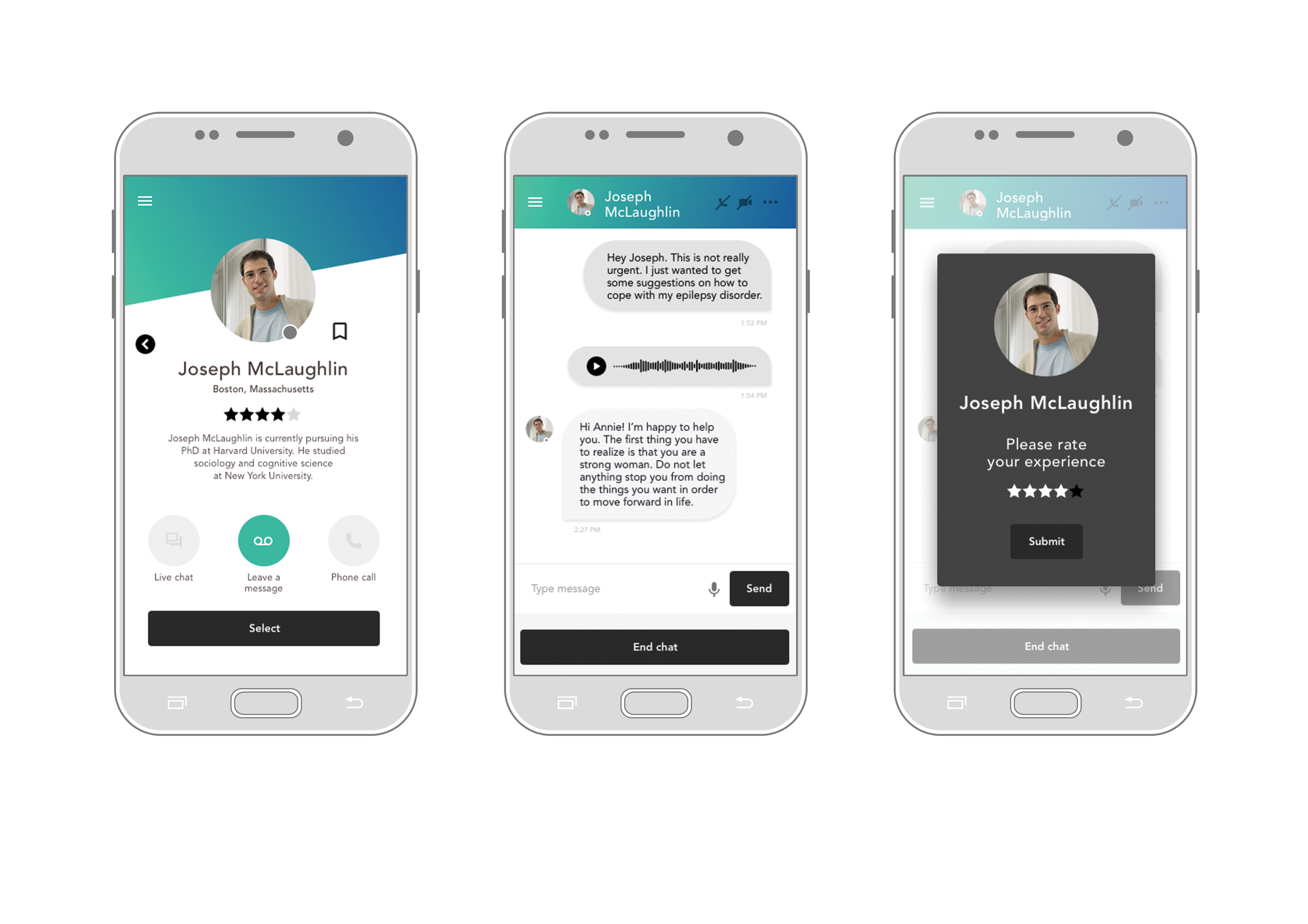
Refined Design
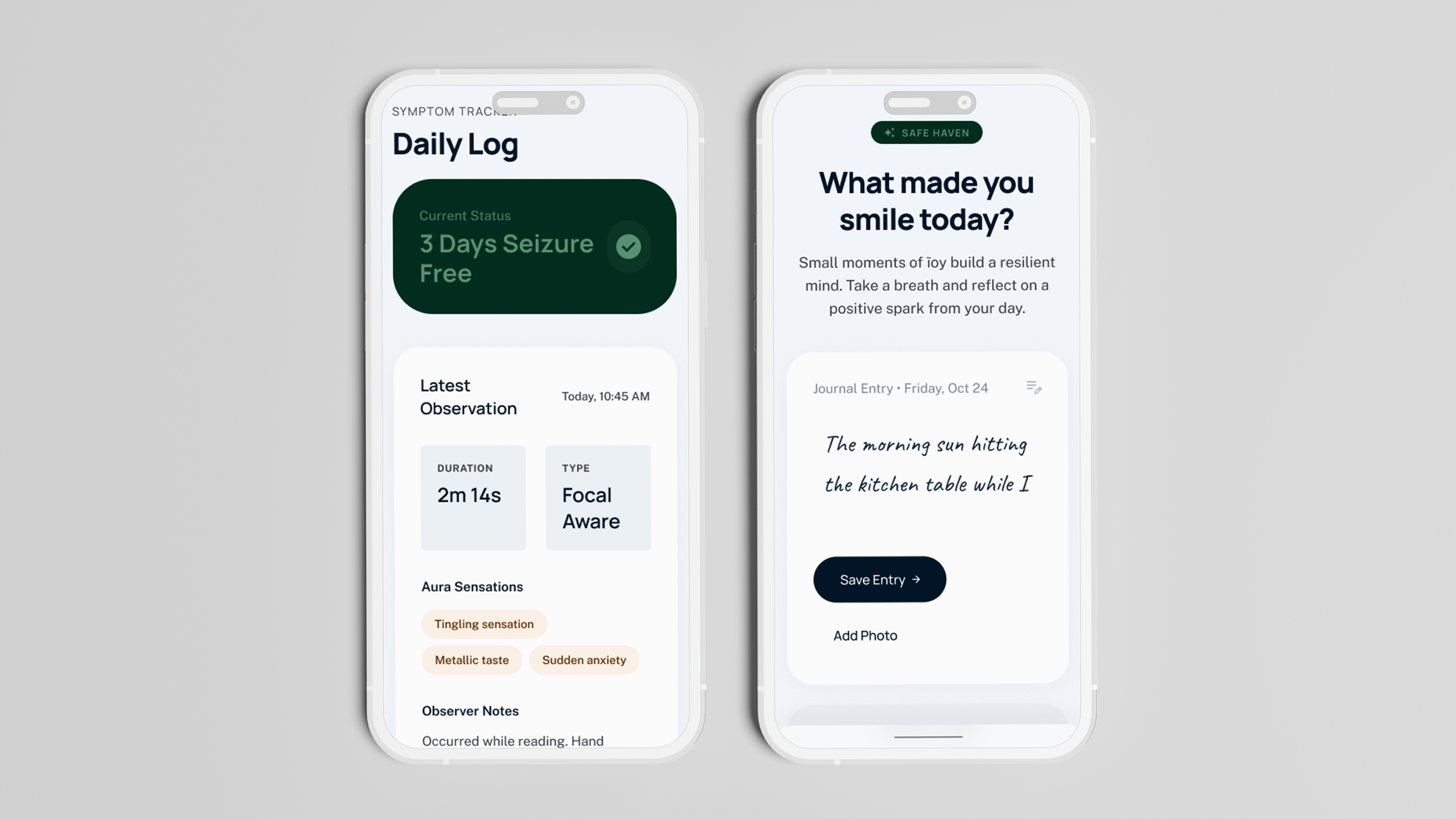
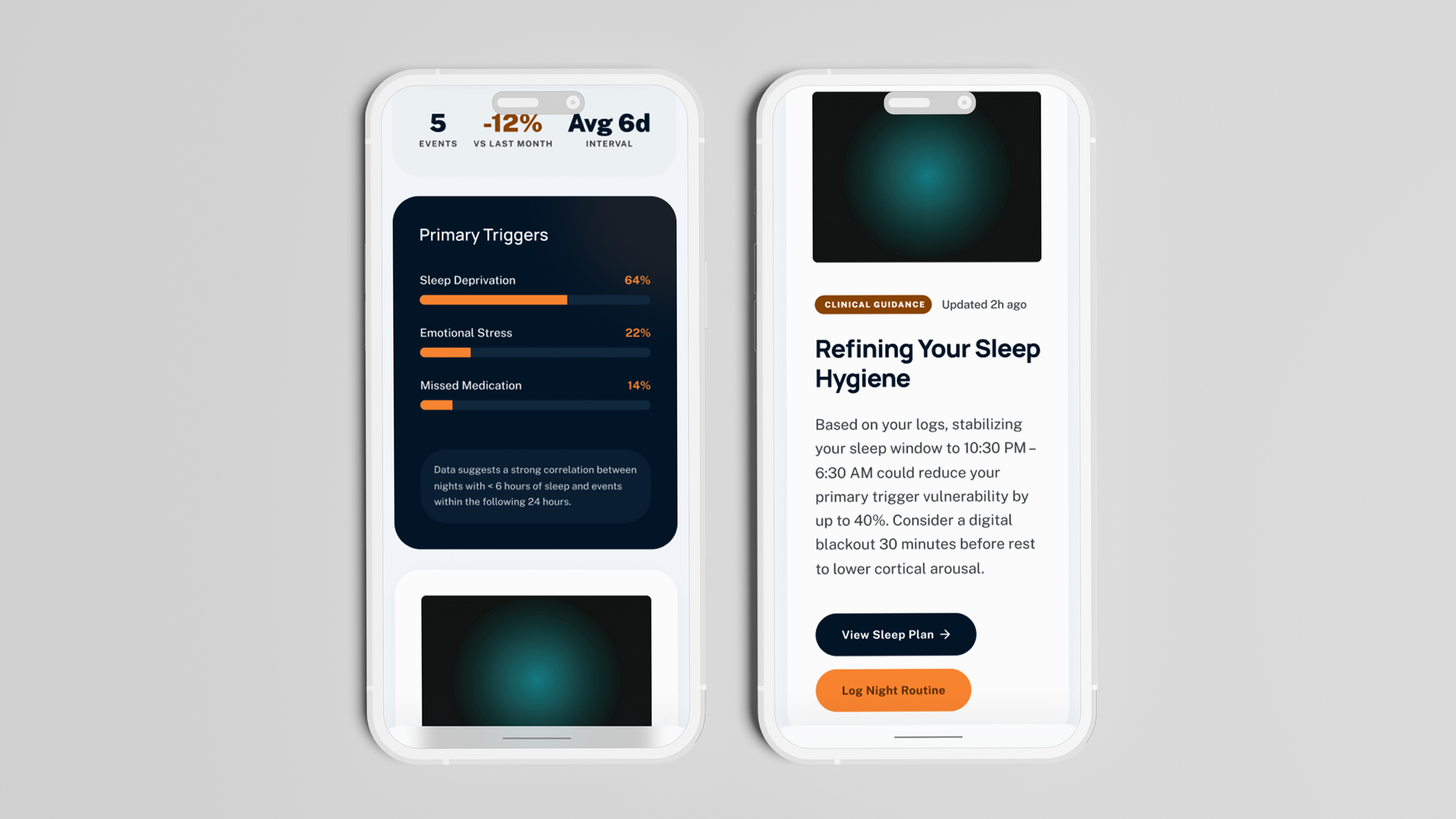
Following the MVP, Version 2 focused on refining the experience based on user feedback, with particular attention to how patients interact with core features like seizure tracking, medication reminders, and health logging. Pain points identified in Version 1 were addressed by simplifying flows, clarifying navigation, and improving the overall structure of the app. The result was a more intuitive and seamless experience that made it easier for users to understand, access, and consistently use key functionalities.
The redesign also introduced a more polished and accessible UI, incorporating improvements to color contrast, typography, touch targets, and overall visual hierarchy to better support users with varying needs. These updates not only enhanced usability but also built greater trust and comfort for patients managing a sensitive health condition. Overall, Version 2 elevated the product from a functional MVP to a more refined, user-centered experience that is easier to navigate and more aligned with accessibility standards.
Business Plan
NeuroNest can potentially display and stream advertisements on the app. To help patients feel inclusive, ads will still be health and neurological related so that they can stay engaged
It can partner up with other businesses and implement APIs so that different applications can be used within Rapport. One example might include Teladoc, BetterHelp, or other tele-medicine products. For this portion, these APIs can be used as part of Rapport’s therapy feature. Building a strong business partnership can be beneficial for both sides of the business